Your order
There are no products in your shopping cart.

Giclée printing is currently one of the most precise and predictable methods of reproducing fine art and photography. Used by artists, galleries, and institutions, it relies on professional pigment-based printing machines, advanced color management, and archival-quality materials. The goal of giclée printing is to faithfully reproduce the character of the original—color, detail, light, and smooth tonal transitions. This quality stems from a consistently controlled process that ensures visual consistency and repeatability with each print.

Giclée printing allows you to transfer an image onto paper or canvas in a way that preserves the look of the original. Colors are consistent, tonal transitions are smooth, and details are clearly visible, even up close. The difference from a standard print becomes visible precisely in the areas that matter most in the work—in light, color depth, and color relationships. This means that the finished print is not only a true reproduction of the file, but also a visual equivalent of the original work—the way the artist intended to present it to the viewer. For this reason, giclée printing is widely used in galleries and institutions as a reference method for reproducing artistic works.
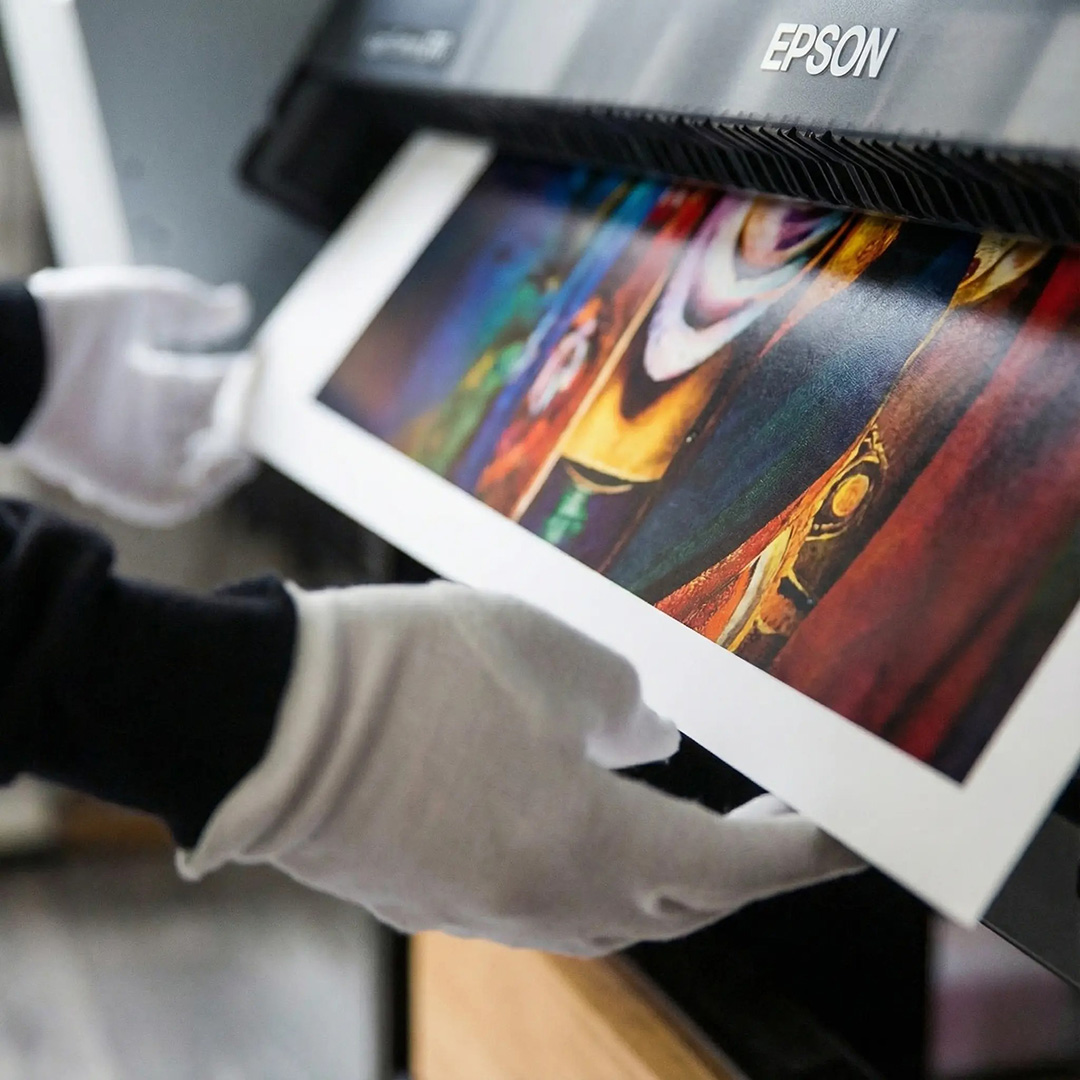
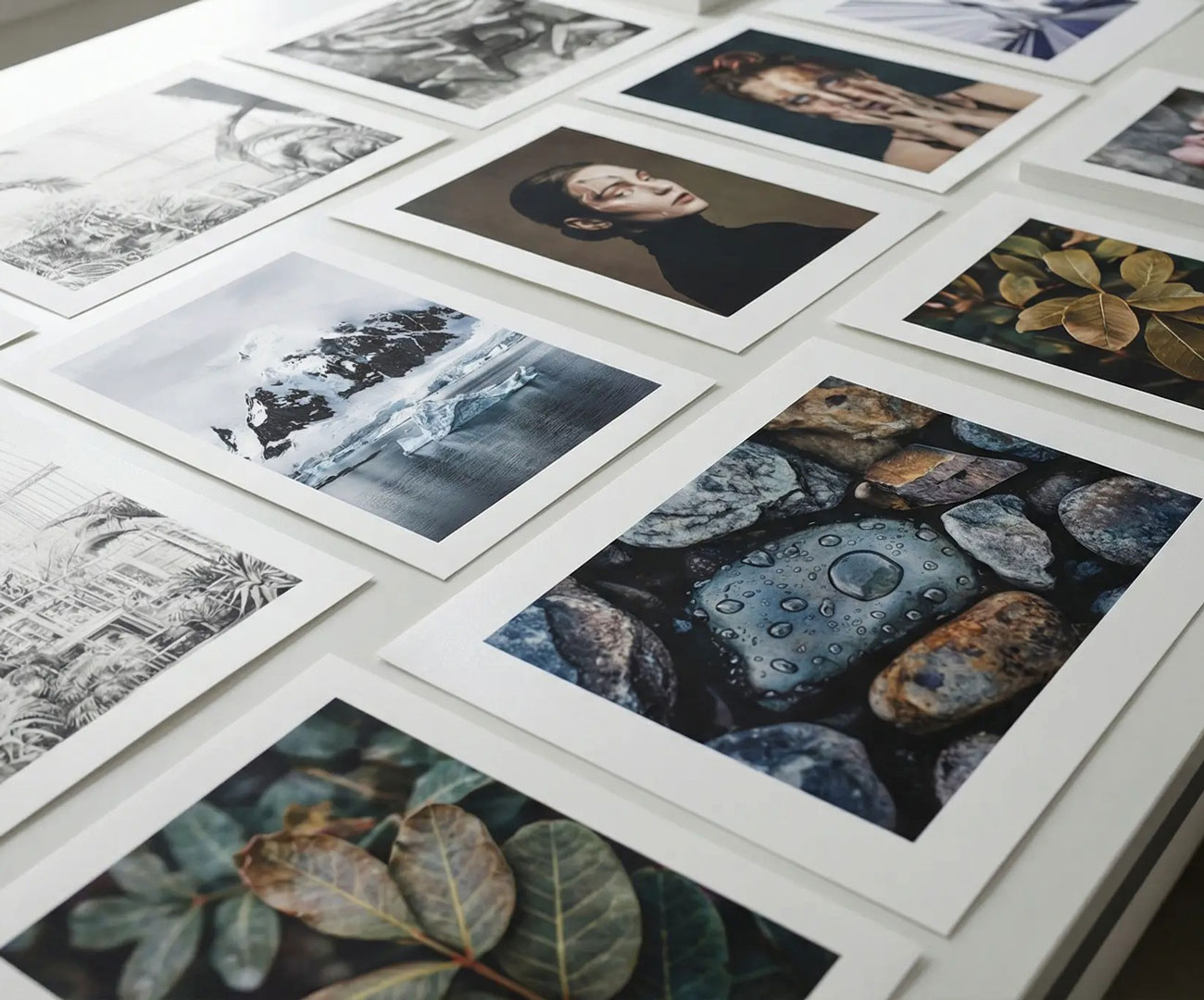
Giclée printing is produced on professional pigment-based printing equipment, utilizing up to 12 separate pigment colors. This allows for highly precise reproduction of both intense colors and smooth tonal transitions, without losing depth or color relationships.
This approach also works well in black-and-white photography. Using multiple shades of black and gray allows for the preservation of rich tones, subtle differences in light and shadow, and natural gradation that cannot be achieved in standard printing. As a result, the image retains its structure, light, and character, regardless of whether it relies on color or grayscale nuances.
“Quality is not an act – it is a habit.”
Giclée printing is performed on fine art papers and canvases intended for museum printing. Combined with certified pigments, it ensures color fastness for many years.
It is this longevity, alongside its visual fidelity, that makes giclée printing accepted and used by galleries, museums and collectors as a fully-fledged form of presenting and archiving works.
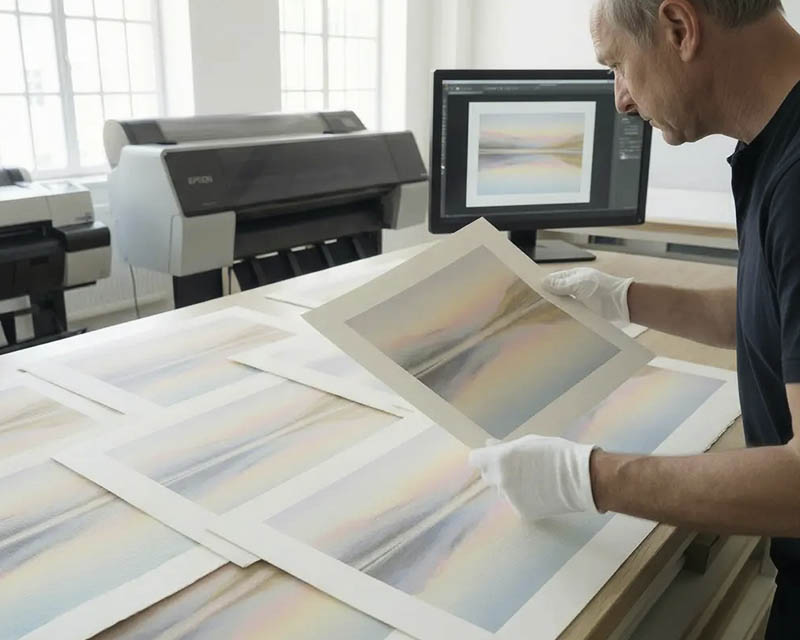
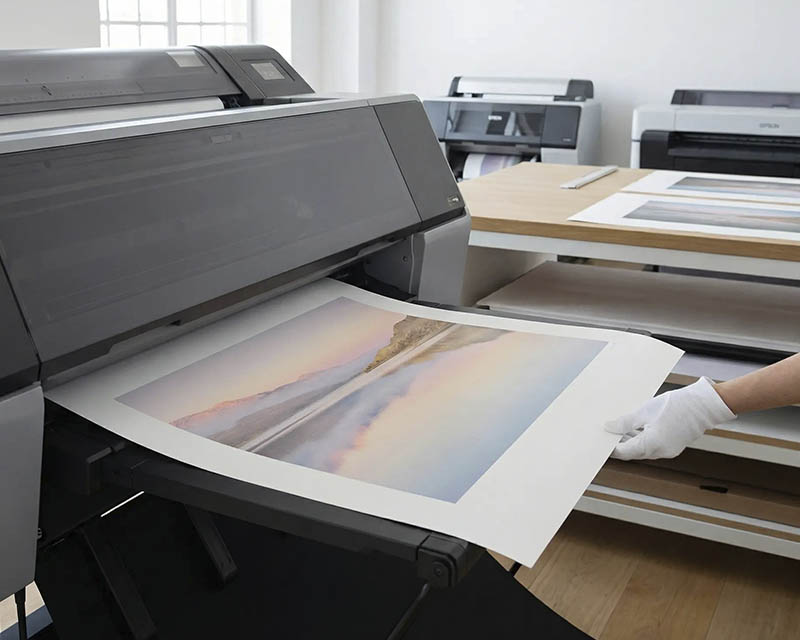
The structure of the paper or canvas, its texture, whiteness, and the way it absorbs pigment all influence the perception of color, light, and detail. Therefore, in professional fine art printing, the substrate is chosen to suit the nature of the work. Different papers work better for reproductions of paintings or graphics, while others work better for photographs—especially black-and-white or those with a large number of subtle tonal transitions. A carefully selected paper or canvas doesn't dominate the image but enhances its character and perception.
One of the key features of giclée printing is predictability. Every step of the process—from file preparation to color management to final printing—is based on clearly defined parameters.
This ensures the final effect is consistent and repeatable, regardless of the point in time. Printing is not the result of chance, but of a consistently implemented technological process.